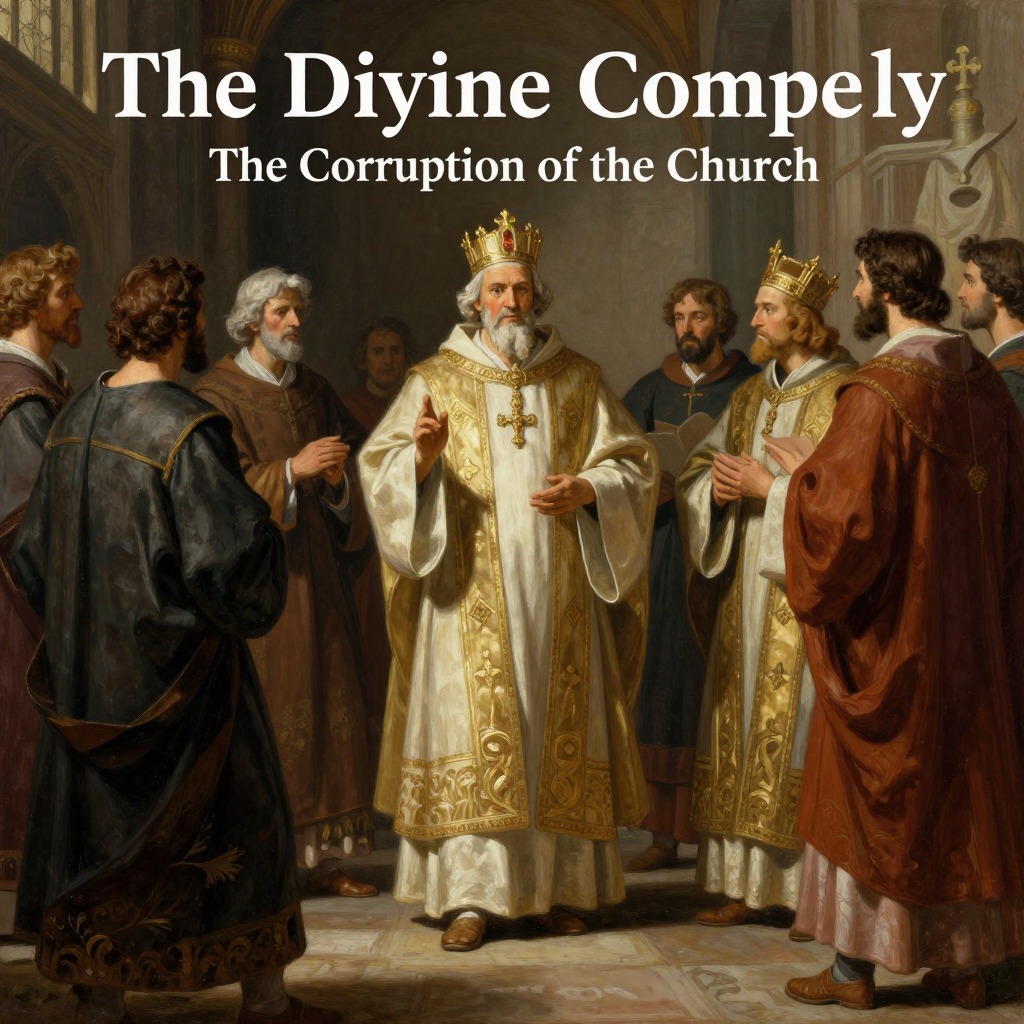
Hypocrisy
Hypocrisy occupies a precise and richly symbolic place in Dante's moral architecture. In the Sixth Bolgia of the Eighth Circle, reserved for the fraudulent, the hypocrites are condemned to walk eternally in the most literal and crushing enactment of their sin: cloaks that are outwardly gilded and inwardly made of lead. The punishment is a perfect contrapasso, rendering visible the inner weight of a life spent in pretense, and it is among the most memorable images in the Inferno for its fusion of visual splendor and spiritual horror.
Location and Classification in the Inferno
Virgil's discourse on the structure of Hell, delivered in Canto XI, establishes that fraud is the most grievous category of sin because it is a uniquely human vice, an abuse of the intellect and trust that sets humanity apart from the beasts. The Eighth Circle, Malebolge, is reserved for the fraudulent and the malicious, and it is subdivided into ten concentric ditches, or bolge. The Sixth Bolgia is assigned to the hypocrites, placed after the barrators (Fifth Bolgia) and before the thieves (Seventh Bolgia). This placement reflects the gravity of hypocrisy within the hierarchy of fraud: it is a sin that directly corrupts the bond of natural love and trust that should exist among people, a betrayal of the very fabric of honest human relations.
The Punishment: Gilded Leaden Cloaks
The physical description of the hypocrites' punishment is the poem's most sustained and devastating image of the sin. The sinners wear mantles that are "gilded" on the outside, so dazzling that they appear magnificent, but the interior is made of "leaden" and so heavy that the cloaks are compared to those Frederick II used to make of straw for his victims. The weight is so immense that the damned move with "footsteps very slow," weeping and appearing "tired and vanquished." The cloaks are fashioned with hoods that cover the eyes, a detail that underscores the willful blindness of the hypocrite to his own inner state. The gilding is a lie, a false front that conceals a crushing reality. The sinners are condemned to an eternity of this exhausting, slow procession, their true nature hidden beneath a beautiful but unbearable shell.
The Inhabitants: Catalano, Loderingo, and Caiaphas
Dante encounters two specific hypocrites who identify themselves: Catalano and Loderingo, members of the Frati Gaudenti, a religious order of knights in Bologna. They were called "Jovial Friars" and were known for their lax observance. The two were jointly appointed by Florence to maintain peace in the city, but their rule was so corrupt that it led to the destruction of the Gardingo district, a site of Guelph property. Their hypocrisy lies in their pretense of piety and justice while serving as instruments of factional violence. They are the ones who explain the nature of their punishment to Dante, describing the cloaks as "orange" and made of lead so heavy that "the weights cause in this way their balances to creak." The most striking figure in the Bolgia, however, is Caiaphas, the high priest who counseled the Pharisees that it was expedient for one man to die for the people. He is crucified to the ground with three stakes, lying naked and crosswise on the path, so that every passing sinner must tread upon him. This is a direct inversion of his role: he who condemned an innocent man to death is now himself pinned to the earth, trampled by the very weight of the hypocrisy he embodied. His father-in-law, Annas, and the other members of the Sanhedrin who conspired against Christ are similarly punished, forming a "malignant seed" of hypocritical religious authority.
The Encounter with Virgil and the Escape
The episode also contains a moment of dramatic tension involving Virgil and the demons. After escaping the Malebranche in the Fifth Bolgia, Dante and Virgil descend into the Sixth Bolgia. Virgil, still angry from the deception of the demons, asks Catalano and Loderingo for the quickest way out. The friars direct him to a broken bridge, but Virgil realizes that the information is false, as the demons had already lied to him about the path. Catalano then remarks that he heard in Bologna that the devil is "a liar and the father of lies," a bitter irony given that the friars themselves are hypocrites. Virgil departs in anger, and Dante follows, leaving the heavy-laden hypocrites behind. This exchange underscores the theme of deception that pervades the entire Malebolge: even the guides of Hell are not to be trusted, and the hypocrites, though punished for their own lies, are still capable of speaking truth when it serves their purpose.
Thematic Significance: The Weight of False Appearances
The punishment of the hypocrites is one of the most conceptually elegant in the Inferno. The gilded leaden cloak is a perfect emblem of the sin: an outward show of virtue or piety that conceals a corrupt and burdensome interior. The slow, painful gait of the damned reflects the spiritual exhaustion of a life spent maintaining a false front. The inclusion of Caiaphas, a figure from the New Testament, ties the sin directly to the betrayal of Christ and the perversion of religious authority. The hypocrites are not merely deceivers of others; they are self-deceivers, trapped in a performance that has become their eternal reality. The episode serves as a powerful critique of those who use the appearance of goodness to mask their true intentions, a theme that resonates throughout the Comedy, particularly in Dante's attacks on corrupt popes and friars. The contrapasso is not just a punishment but a revelation: the hypocrite is forced to wear his sin, to feel its weight with every step, and to be seen for what he truly is, even as the gilding continues to dazzle the unwary.